Find your question
Browse a subject or search for a concept, contest, or problem number. Topic filters help you narrow it down.
 math videos
Hi, I'm Benjamin. In high school, I made math videos and shared them on YouTube. Now, in college, I've given those lessons a home of their own—organized by subject and topic, so it's easier to find an explanation and keep exploring.
Start with a subject. Follow a question.
There's plenty to work through.
Expressions, equations, and the patterns behind them.
Triangles, circles, and a different way to see a problem.
Angles, identities, and the language of waves.
Limits, derivatives, integrals, and infinite series.
Count the possibilities. Make sense of chance.
Primes, digits, divisibility, and mathematical reasoning.
Direction, magnitude, dot products, and cross products.
Work through AMC, AIME, and other contest problems.
In high school, I recorded 350 math videos as I worked through the ideas I was learning—from triangle problems and trigonometric identities to calculus and math competitions. I shared them on YouTube, where my videos have received tens of thousands of views.
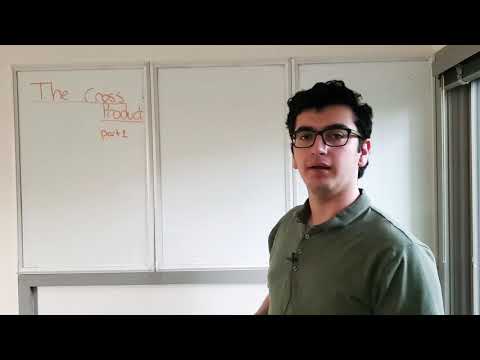
Some lessons happen at a whiteboard. Others are a pencil, a sheet of paper, and a problem worth exploring. They're personal, hands-on explanations from a student who enjoyed figuring things out and sharing the process.
Now that I'm in college, I've built this website to make that collection easier to learn from. Instead of scrolling through years of uploads, you can browse by subject, narrow down a topic, or search for a particular problem. The whiteboard lessons come first in each subject, followed by the pencil-and-paper recordings.
The videos are the same; finding your next lesson is simpler. Pick a topic, pause when you need to, and try a problem alongside me.
— Benjamin Yazdi
Browse a subject or search for a concept, contest, or problem number. Topic filters help you narrow it down.
Whiteboard recordings appear first in every subject. Pencil-and-paper lessons follow, so you can explore both approaches.
Pause the video. Try the next step yourself. Come back to the explanation when you want another perspective.
A whole library of problems. One good place to start.